Webb’s 11-Hour Stare Catches Carbon Swings on a Rogue Brown Dwarf

Webb’s 11-Hour Stare Catches Carbon Swings on a Rogue Brown Dwarf

Twenty-seven researchers, led by the University of Arizona’s Steward Observatory, used the James Webb Space Telescope for eleven uninterrupted hours to study WISE 0855, the coldest known object outside the Solar System. They report irregular water clouds that thicken and thin; the work is accepted by The Astronomical Journal and posted as a preprint. The … Read more
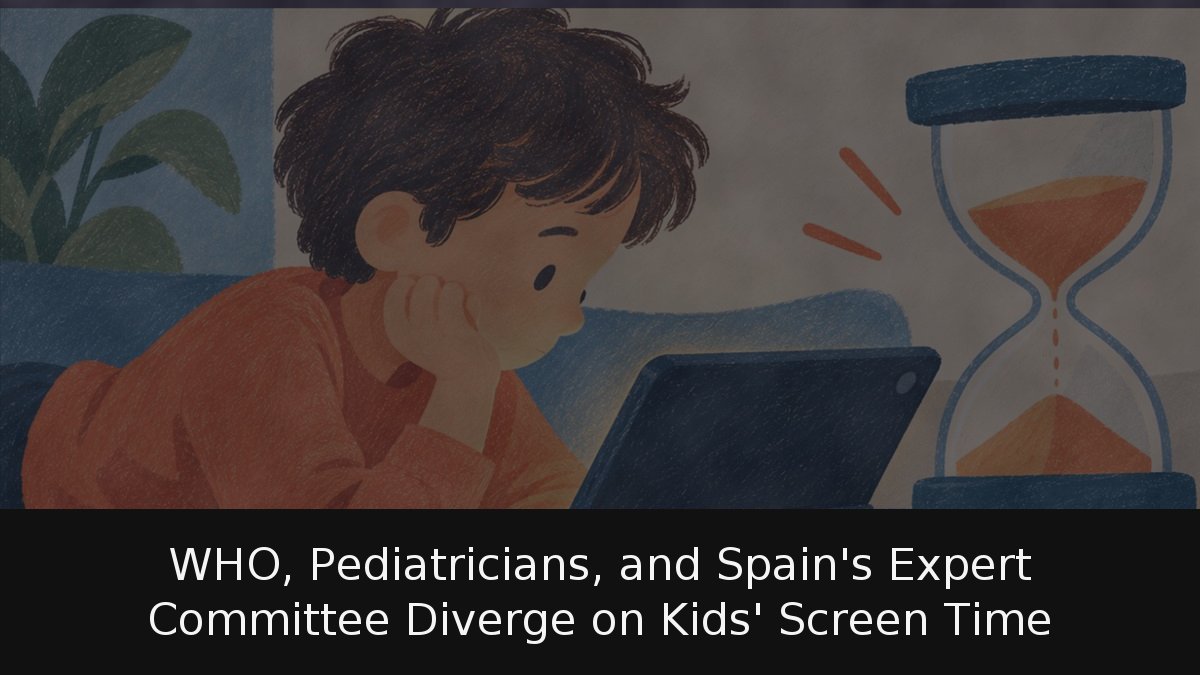
WHO, Pediatricians, and Spain’s Expert Committee Diverge on Kids’ Screen Time

WHO, Pediatricians, and Spain’s Expert Committee Diverge on Kids’ Screen Time

Three authorities have issued children’s screen-time guidance with different thresholds. The World Health Organization advises no screens before age 2 and at most one hour daily for ages 2 to 4. The Spanish Association of Pediatrics (AEP) goes further: avoid screens until 6, under one hour daily until 12, and under two hours after that. … Read more

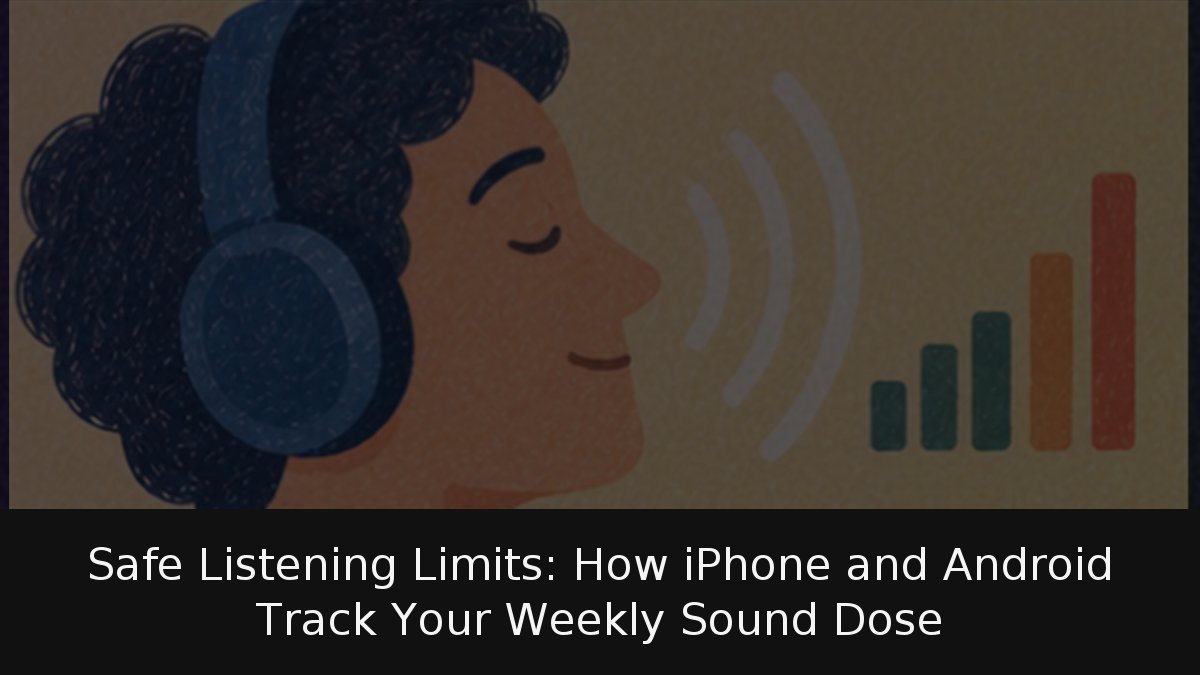
Safe Listening Limits: How iPhone and Android Track Your Weekly Sound Dose

Safe Listening Limits: How iPhone and Android Track Your Weekly Sound Dose

Headphone safety is now a software issue as much as a hearing-health one. The World Health Organization and European regulators converge on a simple weekly budget: 80 decibels for 40 hours per week. Above that, the safe allowance collapses. At 90 dB, the WHO estimates four hours; at 100 dB, about 20 minutes. Since most … Read more

AI-Designed Phage Reaches a Patient, but the Evidence Stops There

AI-Designed Phage Reaches a Patient, but the Evidence Stops There

Radical Numerics, which left stealth in June 2026 with a $50 million seed round, says it treated a patient’s multidrug-resistant bacterial infection with a bacteriophage cocktail — viruses that infect bacteria, not human cells — whose variants its AI model generated. The company posted a technical report on 20 October; The New York Times reported … Read more

Laser-Shocked PET Creates Intact Nanodiamonds, Not a Recycling Fix

Laser-Shocked PET Creates Intact Nanodiamonds, Not a Recycling Fix

A research team at HZDR and the University of Rostock has recovered intact nanodiamonds formed when high-energy laser pulses compressed PET, the plastic used in bottles. The peer-reviewed, open-access study appears in Diamond and Related Materials and reports particles averaging about 3 nanometers, with a detailed measurement of 3.23 ± 0.79 nm. No explosives were … Read more

Webb Finds a Lone Emission Line With No Visible Source in Ultra Deep Field

Webb Finds a Lone Emission Line With No Visible Source in Ultra Deep Field

A sixteen-member team led by the University of Minnesota has used the James Webb Space Telescope to detect a single near-infrared emission line in the Hubble Ultra Deep Field where even the deepest images show no catalogued object. Published on 22 September in The Astrophysical Journal, the finding is a study in elimination: nine possible … Read more

Blue-Light Lenses vs. Screen Strain: What the Evidence Actually Shows

Blue-Light Lenses vs. Screen Strain: What the Evidence Actually Shows

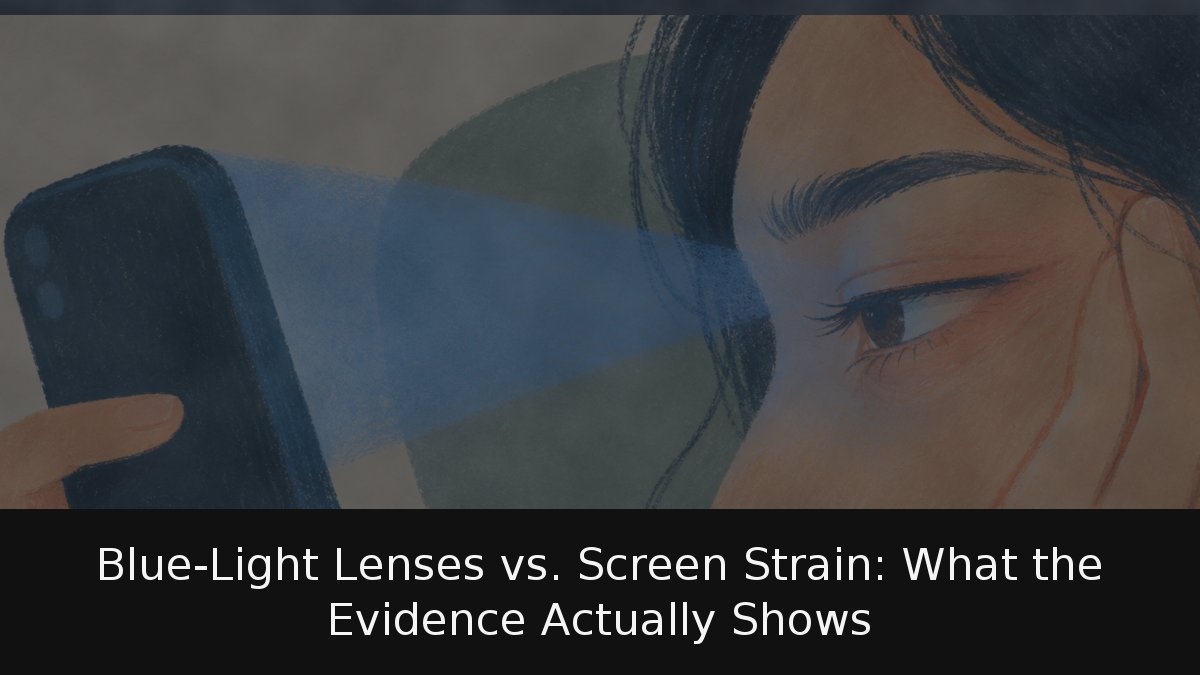
Blue-light-filtering eyewear has become a default accessory for desk workers, marketed as a shield against tired eyes. The strongest synthesis of the evidence suggests the sales pitch is ahead of the science. A 2023 Cochrane review found that blue-light-filtering lenses may not reduce short-term visual fatigue from computer work compared with ordinary lenses, and the … Read more

Vitrified Pig Kidney Thaws After 366 Days, Yet Key Transplant Test Is Missing

Vitrified Pig Kidney Thaws After 366 Days, Yet Key Transplant Test Is Missing

Researchers at the University of Minnesota, co-led by transplant surgeon Erik Finger, have vitrified human-sized pig kidneys at -150°C and rewarmed them without fracture. One kidney spent 366 days frozen and later recovered blood flow and urine production on a perfusion machine, though less urine than most vitrified kidneys in the study. The work is … Read more

Light-Activated Cotton Destroys Microbes on Hospital Surfaces, but Only Where the Light Reaches

Light-Activated Cotton Destroys Microbes on Hospital Surfaces, but Only Where the Light Reaches

Scientists in Valencia have engineered a cotton textile that destroys bacteria, fungi and at least one virus when exposed to ordinary white light — no ultraviolet lamps, no specialised fixtures. In a pilot study, treated swatches placed in patient rooms reduced microbial load by 75% compared with untreated cotton. The research was published in August … Read more

AI Rewrites Metallurgy’s Oldest Rule to Forge Cast Iron From Scrap

AI Rewrites Metallurgy’s Oldest Rule to Forge Cast Iron From Scrap

Metallurgy has spent millennia treating contamination in recycled metal as a defect to flush out with fresh ore. An international research team has now inverted that logic, using machine learning to design cast iron that exploits the copper, tin and titanium found inside scrap. The resulting alloys are up to 15.2% stronger or 73.2% more … Read more