
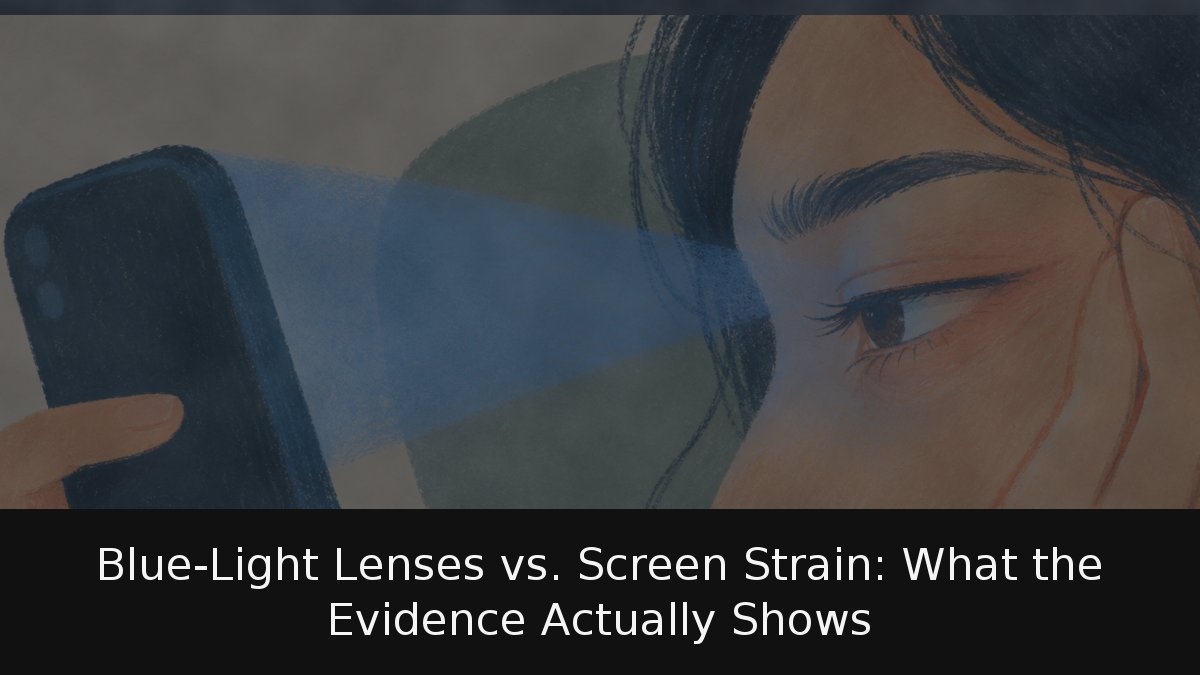
Blue-light-filtering eyewear has become a default accessory for desk workers, marketed as a shield against tired eyes. The strongest synthesis of the evidence suggests the sales pitch is ahead of the science. A 2023 Cochrane review found that blue-light-filtering lenses may not reduce short-term visual fatigue from computer work compared with ordinary lenses, and the certainty of that finding is low.
- Cochrane’s verdict: 17 randomised trials with 619 participants found low-certainty evidence that filters may not ease short-term screen fatigue.
- Sleep claims are weaker: six small trials produced mixed results, with very low certainty.
- Usage matters more: reduced blinking, close focus and glare are likelier causes than screen blue light, according to the ophthalmology groups cited.
What the research does—and does not—show
The review was published on 18 August 2023 and covered 17 randomised controlled trials with 619 participants in six countries. Its authors searched for studies published up to 22 March 2022. They concluded that filter lenses “may not reduce” short-term visual fatigue from computer work compared with non-filtered lenses. The trials were small, from 5 to 156 participants, with follow-up from less than a day to five weeks; hence the low certainty.
The sleep evidence is even less settled. Six trials with 148 participants produced mixed results: three found improvement, three did not, and certainty was very low. No study measured macular health, the central retina, so the review cannot support retinal-protection claims. Reports of headache, worse mood or discomfort were uncommon, but similar complaints appeared with non-filtered lenses, leaving too little data for firm conclusions.
“There is no scientific evidence that blue light from devices damages the eyes,” the American Academy of Ophthalmology states, adding that it “does not recommend” special blue-light-blocking glasses for computer use.
The academy’s March 2021 guidance draws a clear line between marketing and clinical need. In Spain, the Sociedad Española de Oftalmopediatría (SEDOP) endorses the Spanish Society of Ophthalmology’s view that there is no scientific evidence filters are necessary. It notes that screen blue-light exposure is “significantly lower” than natural blue light, and neither approaches ocular safety limits.
Why screens tire the eyes
The AAO and SEDOP attribute screen discomfort mainly to behaviour, not blue light. Most people blink less in front of a display, causing fatigue and dry eye; SEDOP also cites focusing effort, glare and excessive device use. The practical advice is unglamorous but better supported than a filter lens.
- 20-20-20 rule: every 20 minutes, look at something at least 20 feet (about 6 metres) away for 20 seconds. SEDOP calls it 20-6-20.
- Distance: the AAO suggests about 25 inches (63 centimetres). For children, SEDOP recommends 35–40 centimetres and warns that 20 centimetres is linked to more myopia.
- Lighting: adjust screen brightness and contrast, and manage room lighting.
- Dry eyes: use artificial tears when needed; frequent dryness warrants professional advice.
- Children: at least 1.5 hours a day outdoors helps prevent myopia and slow its progression, SEDOP says.
Night mode: a weak assist, not a cure
The most cited test is a 2021 trial in Sleep Health with 167 people aged 18 to 24. Over seven nights, participants used an iPhone before bed with Night Shift on, with it off, or not at all. Wrist accelerometers found no significant sleep differences between groups. In an exploratory analysis, among those sleeping more than 6.8 hours, the no-phone group slept better.
One trial in a young university population is not universal proof, but it aligns with the AAO. The academy acknowledges some evidence that blue light affects circadian rhythm and recommends limiting screens two or three hours before bed. Night settings and dark mode are a complement, not a substitute. SEDOP makes the same recommendation and notes blue light’s influence on melatonin.
The blue-light debate has diverted attention from the more mundane problem. There is no evidence that screen light damages the retina; the likelier cause of tired eyes is hours of close focus, reduced blinking and too few breaks. A filter cannot replace pauses, distance and discipline, and night mode is not a reliable sleep aid. The advice with the strongest backing remains the least convenient: put the phone down well before bedtime. Persistent eye discomfort, blurred vision or frequent headaches warrant an ophthalmologist’s review, not an accessory.