European Supercomputer Reveals Silicon Defects Could Push Solar Efficiency to 31%

European Supercomputer Reveals Silicon Defects Could Push Solar Efficiency to 31%
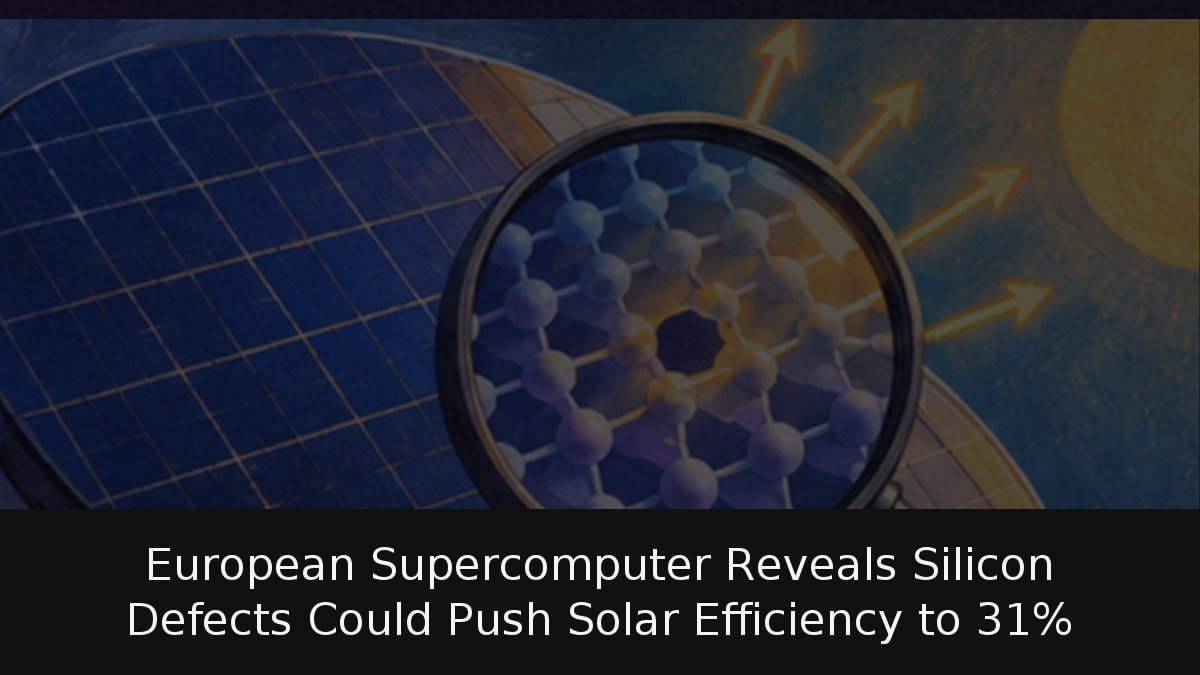
For decades, solar cell engineers have treated imperfections in silicon as a flaw to be engineered away. Now a research team at the University of Paderborn in Germany has found that one class of those imperfections may be doing useful work instead. Running first-principles quantum simulations on the Hawk supercomputer at the HLRS computing centre … Read more
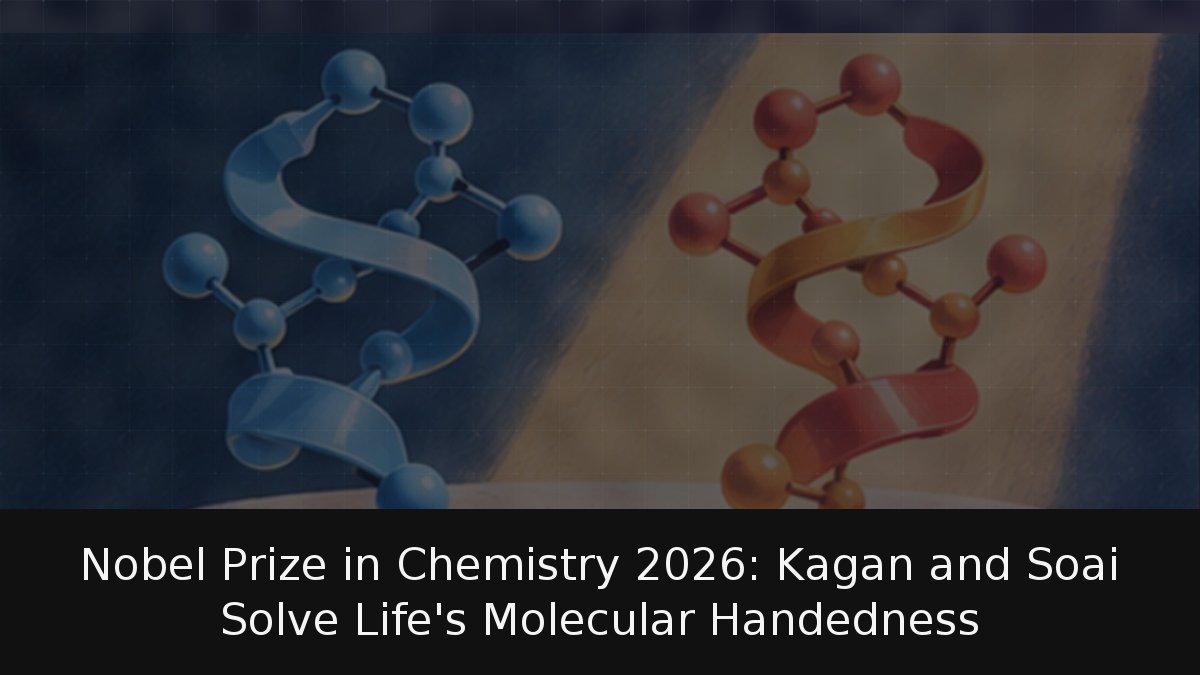

Nobel Prize in Chemistry 2026: Kagan and Soai Solve Life’s Molecular Handedness

Nobel Prize in Chemistry 2026: Kagan and Soai Solve Life’s Molecular Handedness

The Royal Swedish Academy of Sciences announced on 7 October that Henri B. Kagan and Kenso Soai have won the 2026 Nobel Prize in Chemistry for the discovery of non-linear effects and autocatalysis in asymmetric organic synthesis. The award crowns a body of work that finally answers a question chemists have wrestled with for more … Read more

Google, Meta and Biohub Bet $1.8B on the First AI ‘Virtual Cell’

Google, Meta and Biohub Bet .8B on the First AI ‘Virtual Cell’

A cross-sector coalition led by Biohub, Google DeepMind, Meta and Isomorphic Labs — with backing from two US federal agencies — has committed roughly $1.8 billion to build the first predictive “virtual cell”: an AI model engineered to simulate how living cells behave, sicken and respond to treatment. Announced on October 7, 2026 under the … Read more

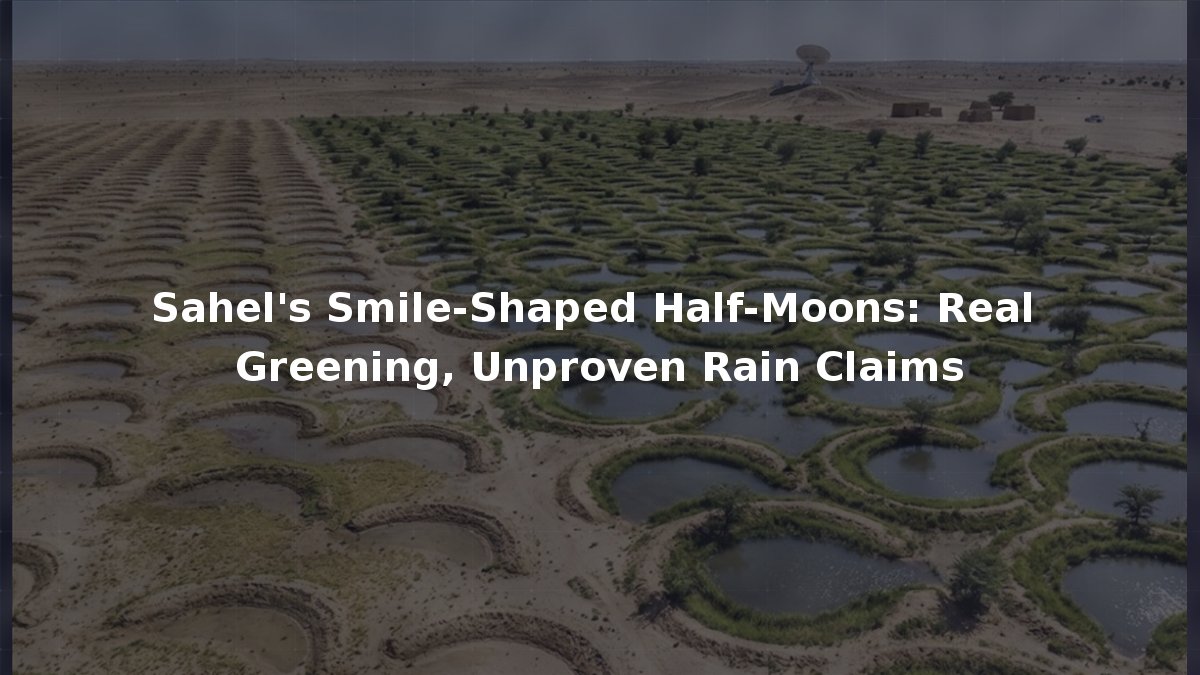
Sahel’s Smile-Shaped Half-Moons: Real Greening, Unproven Rain Claims

Sahel’s Smile-Shaped Half-Moons: Real Greening, Unproven Rain Claims

The Sahel holds more water beneath its soil than it did decades ago, and satellites confirm it. What they do not confirm is the explanation powering a viral video: that the crescent-shaped pits farmers dig across the region — the so-called half-moons — are responsible, or that those pits “create rain.” None of the sources … Read more