
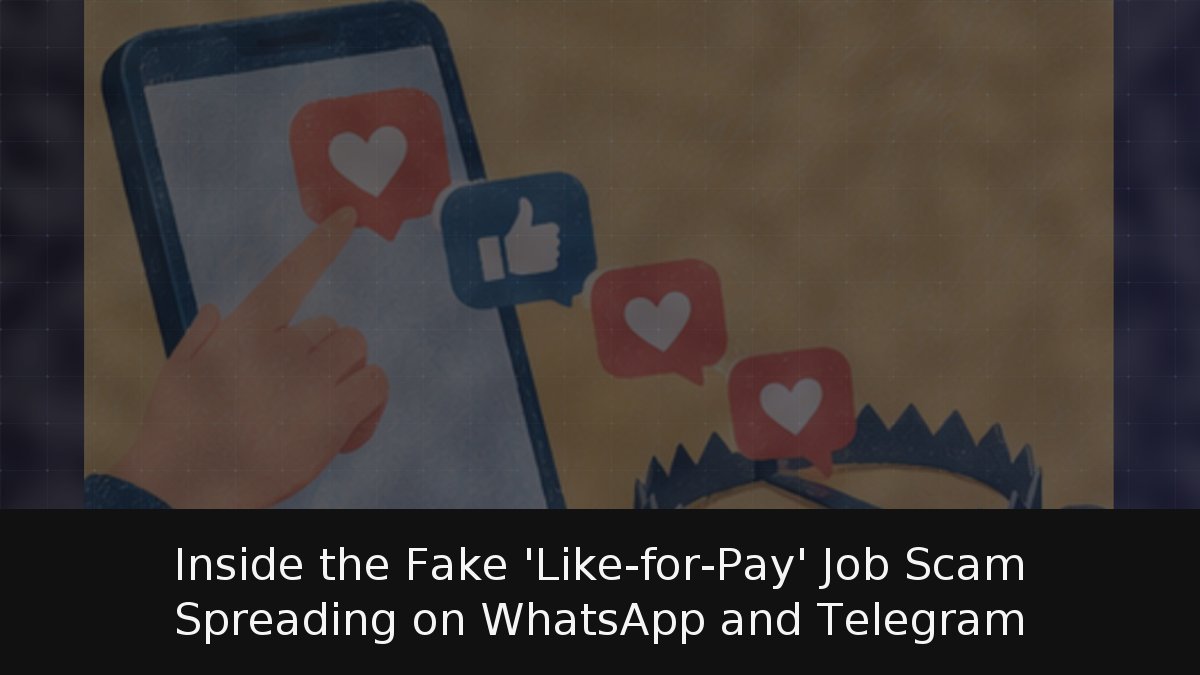
A seemingly harmless message offering paid online tasks has become one of the fastest-growing frauds on messaging platforms. The so-called task scam — also known as the “like scam” — promises easy money for liking posts or rating products, then demands deposits that victims never recover. TechNews DevTop breaks down the playbook, warning signs and recovery steps recommended by INCIBE, the Guardia Civil and the U.S. Federal Trade Commission (FTC).
- Trust is the product: Small real payments build confidence before larger deposit demands.
- Reports are surging: The FTC logged about 20,000 task-scam reports in the first half of 2024, versus roughly 5,000 in all of 2023.
- Victims should act fast: Stop payments, save evidence, contact the bank and police; INCIBE’s free 017 helpline offers guidance.
How the task scam works, step by step
The pattern rarely changes. An unexpected WhatsApp or SMS message offers online work with few details. In a case documented by INCIBE, the sender posed as a YouTube recruiter. Tasks are deliberately simple: like a post or video, or rate product images in an app. The FTC describes assignments grouped in batches of forty, with the promise that completing them will “level up” the worker.
The first payments are real — the scammer’s investment in credibility. Victims are then added to a Telegram group packed with supposed participants posting profits. In a Guardia Civil case, the victim was also assigned a personal “advisor.”
Then comes the first deposit. A new task requires money up front, framed as an investment returned with profit. Early deposits are repaid with a bonus, making the trap feel legitimate. Amounts grow, conditions change without notice, and eventually an “error” or block appears that can only be fixed with another payment.
That final step was almost literal in a 2026 Guardia Civil case: after several operations showing supposed gains, the fraudsters told the victim an error had been made and a new deposit was needed to unlock earnings. The victim lost more than €2,000. The FTC’s summary is blunt: the app displays rising earnings that are not real, and any deposit is gone.
Red flags before the first payment
One warning sign should be enough to walk away.
- No interview. The offer arrives by messaging without a CV, application or interview. The FTC advises ignoring such messages because legitimate employers do not recruit this way.
- Paid to interact. The FTC notes that paying someone to rate or like things online is illegal in the United States, and no honest company does it.
- Pay to get paid. Never pay anyone who promises to pay you. A genuine employer does not charge you for work.
- The group celebrates too loudly. Screenshots of profits, “I got paid” messages and pressure to keep up are staging. The Guardia Civil says the groups are designed to create “a false sense of trust and credibility.”
- Crypto or third-party transfers. FTC data shows job-scam losses paid in cryptocurrency reached about $41 million in the first half of 2024, versus roughly $21 million in all of 2023 — nearly double in six months. The Guardia Civil recommends never sending money to strangers to invest or unlock other payments.
What to do if you have already paid
Stop depositing money today. There is no “release fee” that will return what you lost; every new payment only widens the loss. Do not trust anyone who later offers to recover your money for an upfront charge — Spain’s CNMV identifies such advance-fee recovery offers as a fraud signal.
Preserve evidence: screenshots of conversations, usernames and Telegram groups, phone numbers, destination accounts and Bizum recipients. The Guardia Civil asks victims to gather all information about the charges. If you shared card details, INCIBE recommends cancelling the card. Call your bank and report the fraud to the Policía Nacional or the Guardia Civil. Then return to your bank with a copy of the report to try to recover funds, as INCIBE advises; if unresolved, you can claim with the Banco de España.
Report the profiles on WhatsApp and Telegram so the accounts can be blocked. INCIBE also suggests searching your name online in case personal information has been published, especially if you sent documents. For free guidance, call INCIBE’s 017 helpline. If you installed an app sent through the group, review it carefully: the same channel that delivered the offer may have slipped in something else, and it is worth checking for phishing signals.
Shame is the scammer’s best ally. The FTC cites a study showing that only 4.8% of victims of mass fraud report it to the Better Business Bureau or a public agency. Every report can help trace the money, and the Guardia Civil case shows the trail sometimes leads to a suspect. The danger lies less in the offer than in the payment sequence: once a victim has received real money, skepticism fades. Remember: if you have to pay to get paid, it is not a job.